How Crude Oil Quality Variation Changes Degumming Performance
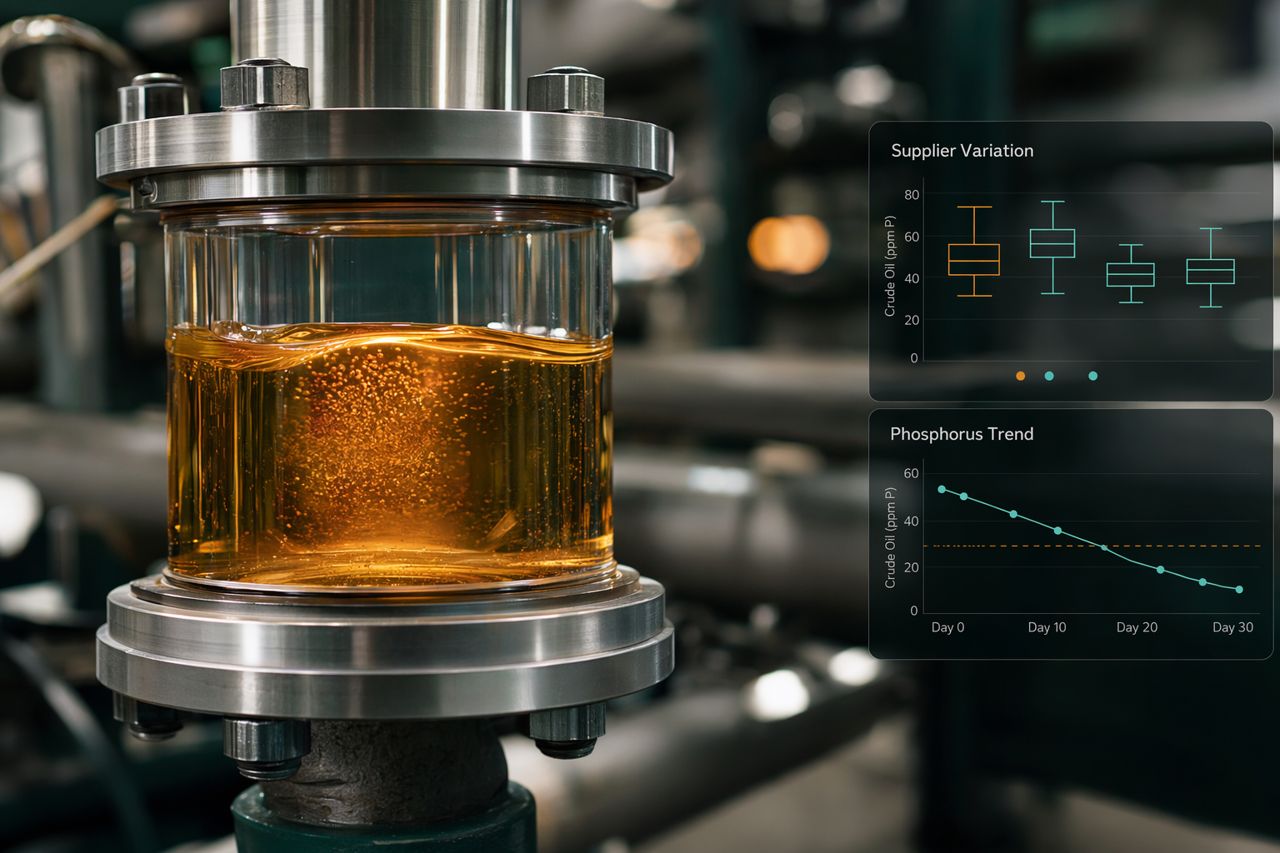
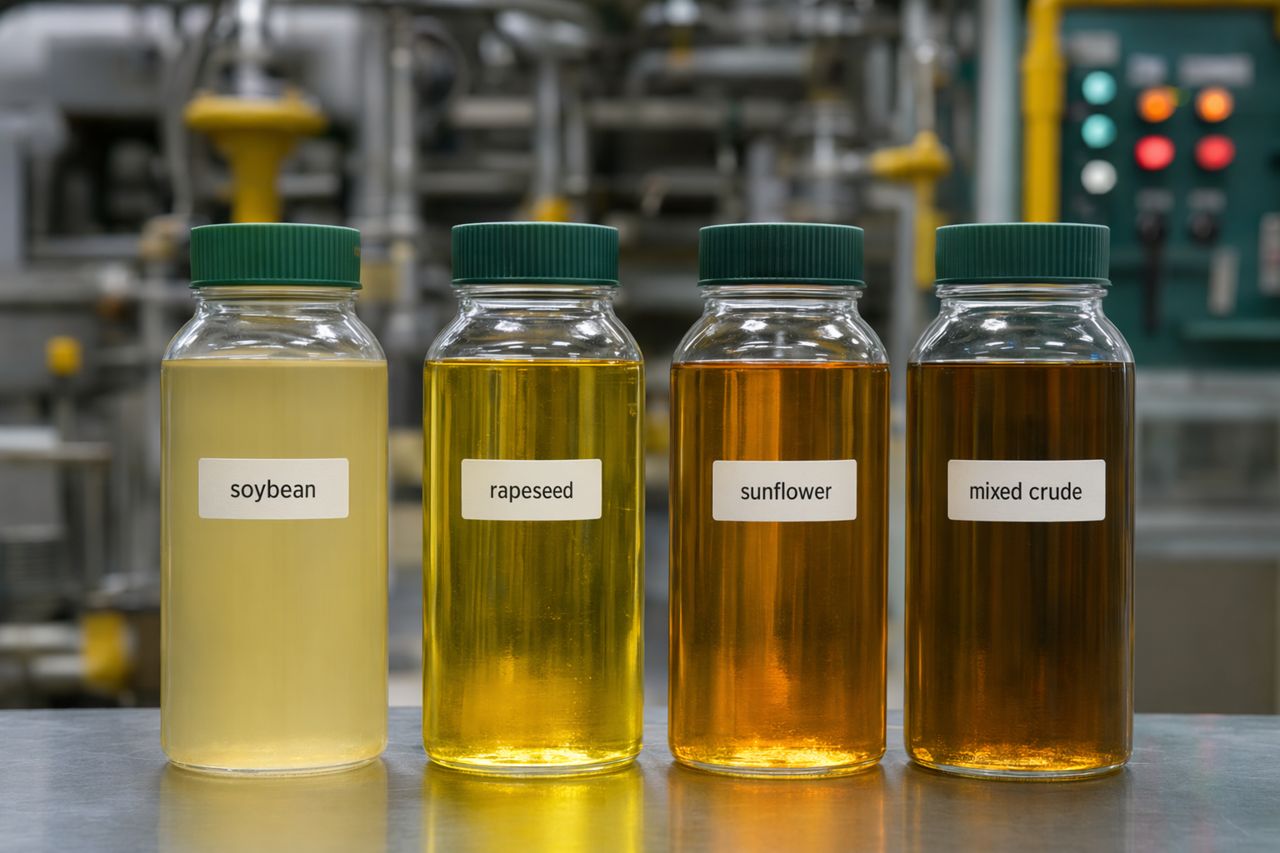
Crude oil quality is not a fixed input. A refinery may run soybean oil from one origin in the morning, rapeseed from a different supplier by the next shipment, then a mixed or carryover stream that behaves differently in hydration, acid conditioning, enzyme contact, and separation.
For edible oil refineries, that variation shows up where it hurts: phosphorus targets, centrifuge stability, neutral oil loss, gum consistency, water use, rework, and throughput. An enzyme degumming program that works well on one crude slate can underperform when the incoming oil changes.
Enzymelight supplies enzyme solutions for edible oil degumming with this operating reality in mind, wholesale and in bulk, quoted per order. We focus on practical control: how to keep degumming performance stable when seed origin, season, storage history, and supplier quality are moving.
Wholesale and bulk supply. Request a quote. Enzymelight supplies degumming enzymes by quotation to edible oil refineries, manufacturers, distributors and resellers, and biotech companies. Send the product, the quantity and the destination through the inquiry form, and we reply with a quote.
Why crude oil variation changes degumming results
Phospholipids are not a single, predictable contaminant. Their level and behavior vary with crop, extraction conditions, storage, handling, and upstream impurities. The same phosphorus number can also behave differently depending on how much is hydratable, how much is non-hydratable, and how the oil responds to water, acid, shear, residence time, and separation.
When crude quality shifts, refinery teams often see changes in:
- Phosphorus reduction after enzymatic degumming
- Water and acid response during conditioning
- Centrifuge interface stability and gum discharge behavior
- Neutral oil loss into gums or heavy phase
- Haze formation after clarification
- Downstream bleaching pressure and filtration load
- Rework frequency when oil misses internal targets
- Operator confidence in dose settings and hold time
The result is not only a lab deviation. It becomes a production issue: slower decisions, more sampling, more tank cycling, more chemical correction, and less predictable yield.
Seasonal variation: the refinery sees the crop year
Seasonal change is one of the most common reasons degumming performance drifts. Seed maturity, weather stress, harvest timing, drying conditions, and storage duration can all influence crude oil composition before it reaches the refinery.
Soybean oil
Soybean crude can vary significantly by origin and crop year. Refineries may see changes in total phosphorus, non-hydratable phospholipids, metals, moisture, and minor impurities. A dose and conditioning approach that performed well during one supply period may need adjustment when the crop changes.
Typical plant-floor signals include:
- Higher residual phosphorus after the same treatment
- More variable gum phase volume
- Slower interface formation in the centrifuge
- Increased haze after polishing or storage
- Higher corrective acid or water demand
Rapeseed and canola oil
Rapeseed and canola crude can be sensitive to upstream extraction and storage conditions. Degumming behavior may be affected by phospholipid profile, free fatty acid level, trace metals, and suspended solids.
Operationally, this can lead to:
- Changes in hydration response
- Less predictable enzyme contact performance
- Gum phases that are harder to separate cleanly
- Higher attention to residence time, mixing, and temperature control
Sunflower oil
Sunflower crude often appears straightforward until supplier, seed condition, or storage history changes. Some lots clarify quickly; others create persistent haze or unstable separation even when the operating recipe looks unchanged.
Refinery teams should watch for:
- Sudden haze after degumming
- Residual phosphorus variability by tank
- Changes in gum texture and discharge
- Greater downstream pressure on bleaching or filtration
Mixed crude oils and carryover streams
Mixed oils add another layer of uncertainty. When tanks contain blends, heel carryover, or supplier combinations, the refinery is not treating one consistent raw material. The phospholipid profile may be uneven across the tank, and the response to water, acid, enzyme, and centrifugation can shift during a production run.
For mixed crude operation, the goal is not a perfect theoretical recipe. The goal is a robust dosing window and operating discipline that can absorb variation without excessive yield loss or rework.
Supplier-driven variability: same oil type, different behavior
Two crude oils with the same commodity name may behave differently in the degumming section. Differences in seed handling, extraction, desolventizing, storage, transport, and crude oil clarification all affect refinery performance.
A new supplier can change:
- Baseline phosphorus level
- Share of hydratable versus non-hydratable phospholipids
- Moisture and insoluble impurities
- Metal content that influences acid conditioning needs
- Free fatty acid level and emulsion tendency
- Centrifuge load and gum quality
This is why Enzymelight recommends treating supplier changes as process events, not just purchasing events. When a crude source changes, the degumming program should be checked against current phosphorus targets, separator behavior, and neutral oil loss.
What crude variation does to enzyme dosing control
Enzyme degumming depends on the right contact conditions. Crude oil variation can affect how much enzyme is needed, how well the reaction proceeds, and how cleanly the treated gums separate.
A fixed dose may be convenient, but it may not be commercially optimal across a changing crude slate. Too little treatment can leave phosphorus behind and create downstream burden. Too aggressive a correction can increase cost without improving the operating result.
A practical dosing strategy should account for:
- Incoming crude quality by supplier and tank
- Current residual phosphorus target
- Available residence time
- Water and acid conditioning limits
- Mixing quality and temperature control
- Centrifuge capacity and interface stability
- Desired gum quality and neutral oil retention
Enzymelight supports dosing recommendations as an operating window, not a one-time number. That helps refinery managers adjust intelligently when crude quality moves.
Centrifuge behavior is often the first warning sign
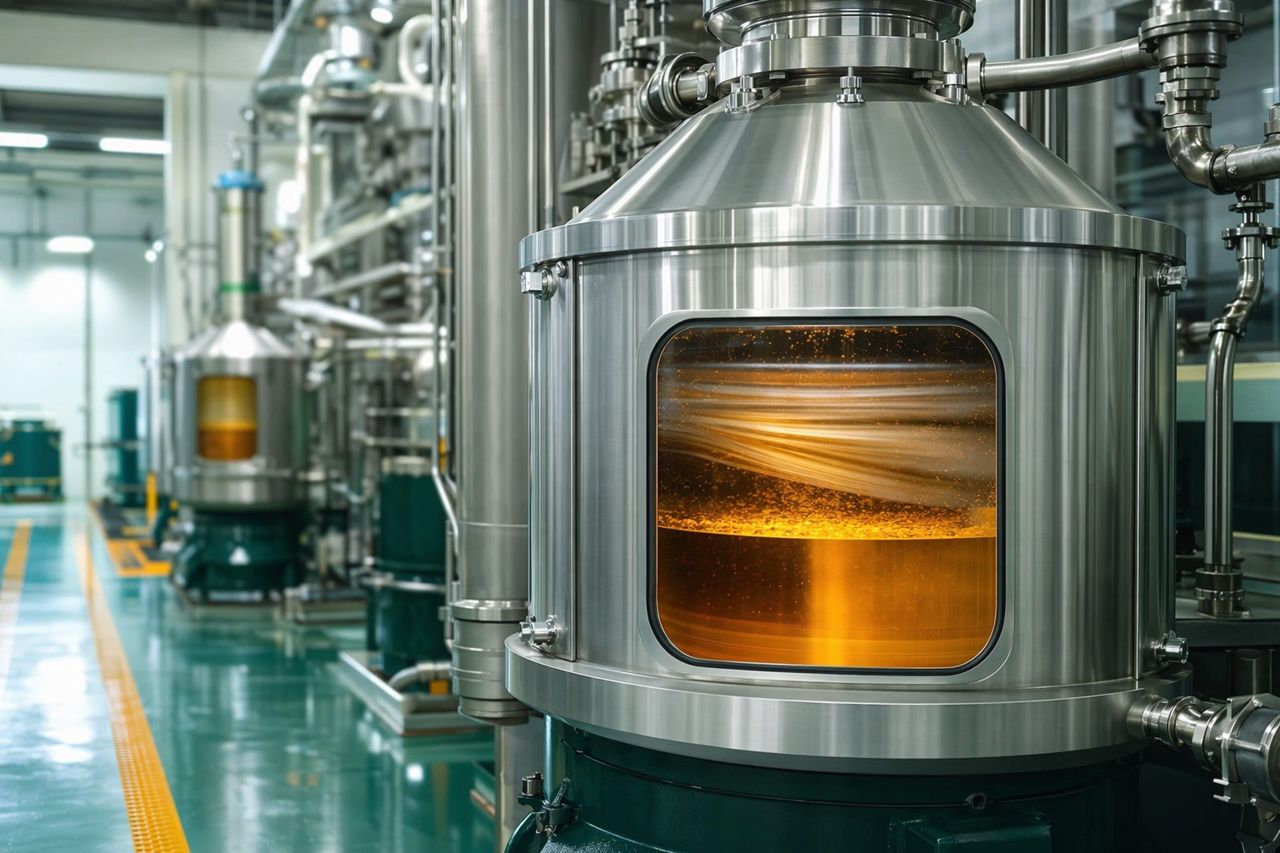
Before the final lab result is available, the centrifuge often shows whether the degumming process is under control. Crude oil variation can change emulsion tendency, gum phase structure, and separation sharpness.
Operators may notice:
- A thicker or looser gum phase
- Interface drift
- Increased oil carryover into gums
- Heavy phase instability
- More frequent bowl adjustments
- Higher solids or haze after separation
- Reduced confidence in flow rate increases
These are not minor symptoms. Poor separation can convert a chemical or enzymatic issue into a yield issue. Enzymelight looks at enzyme selection and dosing in connection with separator behavior, because phosphorus reduction is only valuable when the refinery can separate cleanly and protect neutral oil.
Neutral oil loss: the hidden cost of unstable degumming
Degumming is not only about meeting a phosphorus target. It is also about keeping valuable neutral oil in the product stream.
When crude quality changes and the process is not adjusted, neutral oil loss can rise through:
- Oil entrainment in hydrated gums
- Stable emulsions that carry oil into the heavy phase
- Extra reprocessing loops
- Overcorrection with water or acid
- Poorly controlled centrifuge interfaces
Even small shifts in yield can have a meaningful commercial effect at refinery scale. A strong enzyme degumming program should therefore be evaluated on both quality and economics: phosphorus reduction, oil recovery, separator stability, water use, chemical demand, and run continuity.
How Enzymelight approaches variable crude oil trials
Enzymelight trials are built for refinery decision-making. We do not treat crude variation as an exception; we design the trial around it.
A typical Enzymelight support process includes:
-
Crude slate review
We map oil types, supplier changes, seasonal risks, tank practices, and known trouble lots. -
Current process baseline
We review conditioning steps, residence time, water and acid use, separator limits, and phosphorus targets. -
Dose window recommendation
We propose a practical enzyme dosing range for the refinery’s operating conditions and crude variability. -
Trial plan for production reality
We help define sampling points, run duration, operating checks, centrifuge observations, and decision criteria. -
Performance review
We compare phosphorus reduction, oil clarity, gum behavior, neutral oil retention, and downstream impact. -
Scale and supply alignment
We support repeatable ordering, inventory planning, and adjustment guidance for future crude changes.
The objective is not to add complexity. The objective is to give refinery teams a more controlled way to handle crude quality variation without sacrificing uptime or yield.
Practical control points for refinery managers
If your edible oil refinery is seeing inconsistent degumming performance, start with the process areas most affected by crude quality variation.
Track crude by source, not just oil type
Record supplier, origin, crop period, storage duration, tank blend, and any known upstream issue. This makes performance patterns easier to interpret.
Watch the centrifuge, not only the final phosphorus result
Interface stability, gum texture, and oil carryover often reveal process stress early. These observations help refine enzyme dose and conditioning.
Keep dosing flexible within a controlled window
A controlled dose window is better than a rigid setting when crude quality changes. The window should be tied to crude quality, phosphorus target, residence time, and separator performance.
Protect neutral oil yield
Do not evaluate degumming only by residual phosphorus. Include gum oil content, rework, downstream chemical demand, and production interruptions in the commercial review.
Revalidate after supplier or season changes
When the incoming crude slate changes, confirm that the degumming recipe still fits. Small adjustments can prevent larger production losses.
When to involve Enzymelight
Consider bringing Enzymelight into the discussion if your refinery is experiencing:
- Variable residual phosphorus after degumming
- Unstable centrifuge interfaces
- Haze or poor oil clarity after treatment
- Increased gum oil losses
- Higher water or acid demand
- Rework caused by missed internal targets
- Supplier changes or seasonal crude shifts
- A planned move from chemical-heavy degumming to enzyme-assisted operation
Enzymelight supplies enzyme solutions for edible oil degumming with process accountability: product selection, dose guidance, trial planning, and supply reliability. We work with refinery teams in the language of plant performance, not academic theory.
Request a quote for your crude slate
If crude oil quality variation is changing your degumming performance, Enzymelight can help evaluate the fit for an enzyme program tailored to your refinery. Wholesale and bulk supply is quoted per order.
To get a quote back quickly, put these in your inquiry:
- Product: the degumming enzyme you want priced, or the problem you need it to solve
- Quantity: trial lot and expected monthly or campaign volume
- Destination: country and delivery site
- Oil types in your crude slate, current phosphorus target, process flow and the performance issue, if known