Bulk Phospholipase for Oil Refineries
Enzymelight supplies bulk phospholipase for edible oil degumming on wholesale terms, quoted per order, to refineries, manufacturers, distributors and resellers, and biotech companies that need dependable degumming performance without adding uncertainty to production. We work with refinery teams that are focused on practical outcomes: lower residual phosphorus, cleaner centrifuge separation, reduced neutral oil loss, stable dosing behavior, and a trial plan that can be defended commercially.
If you are qualifying an enzyme supplier for edible oil degumming, the question is not only whether the enzyme works in a beaker. The question is whether it fits your crude oil profile, water addition practice, acid conditioning, retention time, centrifuge setup, storage conditions, and purchasing rhythm.
Wholesale and bulk supply. Request a quote. Regular supply contracts and one-off bulk orders are both quoted per order. Send the product, the quantity and the destination through the inquiry form, and we reply with a quote.
Built for refinery purchasing decisions
Bulk enzyme buying is a process decision as much as a procurement decision. Enzymelight supports purchasing, technical, and operations teams with the information needed to compare supply options clearly.
What refinery buyers typically need to confirm
- Compatibility with soybean, canola, sunflower, corn, rice bran, or blended crude oil streams
- Expected impact on residual phosphorus after enzymatic degumming
- Dosing control approach for continuous or batch operations
- Behavior through acid conditioning, hydration, retention, and centrifuge separation
- Influence on gums consistency, soap formation risk, and downstream refining load
- Neutral oil retention versus conventional water or acid degumming routes
- Packaging, storage profile, lead time, batch consistency, and documentation
- Trial support before committing to routine supply
Enzymelight keeps the discussion grounded in your plant configuration and commercial targets rather than theoretical enzyme language.
Where bulk phospholipase supports refinery performance
Phospholipase-based degumming can help refineries convert or release phospholipids that are difficult to remove through water degumming alone. For many plants, the value is seen in more consistent phosphorus reduction, improved separation behavior, and better oil yield protection.
Practical operating goals
Enzymelight supply programs are planned around refinery-level goals such as:
- Meeting tighter phosphorus targets before neutralization, bleaching, or physical refining
- Reducing variability from crude oil quality changes
- Improving centrifuge interface stability and gum discharge behavior
- Lowering neutral oil loss into wet gums
- Supporting lower water use where the process allows
- Helping operators maintain a repeatable dosing and retention window
- Reducing rework, slowdowns, and quality-driven interruptions
The right enzyme program should make the line easier to run, not harder to explain.
Process compatibility questions we help answer
Every refinery has constraints. Enzymelight helps evaluate how bulk phospholipase can be introduced without ignoring the realities of your existing equipment.
Feedstock and crude oil quality
Crude oil variability affects degumming performance. Enzymelight can help structure a trial around the oils you actually process, including seasonal shifts, origin changes, and blends. The aim is to evaluate enzyme performance under realistic plant conditions, not idealized samples.
Acid and water conditioning
Enzymatic degumming depends on the right conditioning environment. Enzymelight discusses your current acid addition, water addition, mixing intensity, and hydration practice to identify whether the enzyme can be integrated with minimal process disruption.
Retention and temperature window
A refinery trial should reflect actual retention availability and heat balance. Enzymelight works with your team to define a practical operating window that suits your line, rather than forcing the plant into a fragile laboratory condition.
Centrifuge behavior
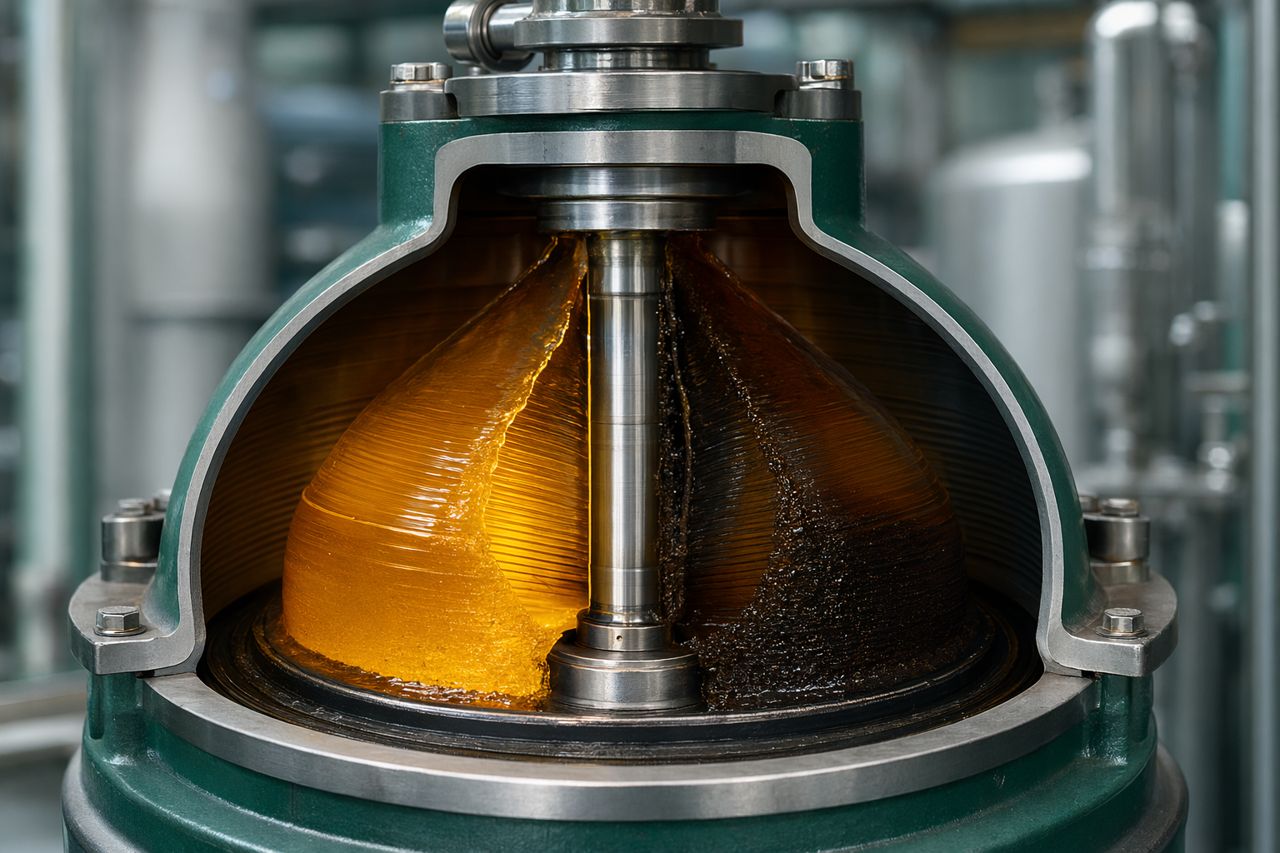
For refinery managers, centrifuge performance is often where the process either proves itself or creates problems. Enzymelight focuses on visible plant indicators: interface stability, gum consistency, discharge reliability, carryover risk, and operator control.
Downstream refining impact
Better degumming can reduce burden on later steps. Depending on the process route, this may support bleaching earth efficiency, physical refining readiness, soapstock control, or final oil quality stability. Enzymelight helps connect trial data to downstream value.
How Enzymelight supports refinery trials
A successful trial needs more than a sample shipment. It needs a plan that operators can run, quality teams can measure, and procurement can evaluate.
Trial planning framework
Enzymelight can support a practical refinery trial with:
- Process baseline review — crude oil type, current degumming route, residual phosphorus profile, water and acid use, centrifuge observations, and yield concerns.
- Trial objective setting — define what success looks like: phosphorus target, separation stability, oil loss reduction, water-use improvement, or downstream load reduction.
- Dosing and addition point review — identify a controlled addition strategy compatible with your pump, mixer, retention, and automation setup.
- Operating window alignment — confirm temperature, pH conditioning, residence time, and separation conditions that are realistic for your plant.
- Sampling and comparison plan — compare against baseline production using the refinery’s own quality and mass-balance approach.
- Commercial review — evaluate enzyme cost against oil yield, utility use, rework reduction, and process stability.
The goal is to generate decision-ready evidence, not just promising observations.
Why refineries choose Enzymelight
Enzymelight is positioned for B2B enzyme supply where reliability, documentation, and process accountability matter. We understand that refinery teams need supply partners who can support plant trials, answer technical questions, and deliver consistently after qualification.
Enzymelight advantages
- Bulk phospholipase supply for edible oil degumming applications
- Plant-floor technical discussions focused on uptime and yield
- Support for purchasing qualification and trial planning
- Practical guidance on dosing control and process integration
- Attention to centrifuge behavior and separation quality
- Supply reliability for ongoing refinery programs
- Clear communication for operations, quality, and procurement teams
Buying considerations before requesting a quote
To help Enzymelight respond accurately, it is useful to share a few refinery details when you submit the quote form.
Useful information to include
- Product: bulk phospholipase for degumming, or the degumming problem you need it to solve
- Quantity: trial lot and expected monthly or campaign volume, and whether you want regular scheduled supply
- Destination: country and delivery site
- Oil type or crude oil blend
- Current degumming method
- Target phosphorus level or current phosphorus challenge
- Continuous or batch operation
- Approximate production scale
- Current centrifuge configuration and any separation issues
- Storage and packaging preferences
- Desired trial timing and routine supply expectations
If some details are not yet available, send what you have. Enzymelight can help structure the next questions.
Request a bulk phospholipase quote
Enzymelight supplies refineries looking for dependable enzyme performance, practical trial support, and a credible path from evaluation to routine use.
Wholesale and bulk supply is quoted per order. Use the inquiry form to tell us the product, the quantity and the destination, plus your oil type, process route and target outcomes. We will respond with the next practical steps for quotation, technical review, and trial planning.
Request a bulk phospholipase quote through the inquiry form.