Water Management in Edible Oil Degumming Lines
Water is small on a flow sheet and large in the refinery balance. In edible oil degumming, the way water is introduced, mixed, separated, cleaned, and discharged affects phosphorus removal, centrifuge behavior, neutral oil loss, wastewater load, and line stability.
For plants evaluating an enzyme supplier for edible oil degumming, the discussion should not stop at enzyme selection. The commercial result depends on how the enzyme program fits the refinery’s water discipline: hydration, dilution, retention, washing, CIP demand, and effluent handling.
Enzymelight supports edible oil refineries with enzyme degumming programs built around practical operating control, trial accountability, and reliable wholesale supply, quoted per order.
Wholesale and bulk supply. Request a quote. Enzymelight supplies degumming enzymes by quotation to edible oil refineries, manufacturers, distributors and resellers, and biotech companies. Send the product, the quantity and the destination through the inquiry form, and we reply with a quote.
Why water management matters in enzyme degumming
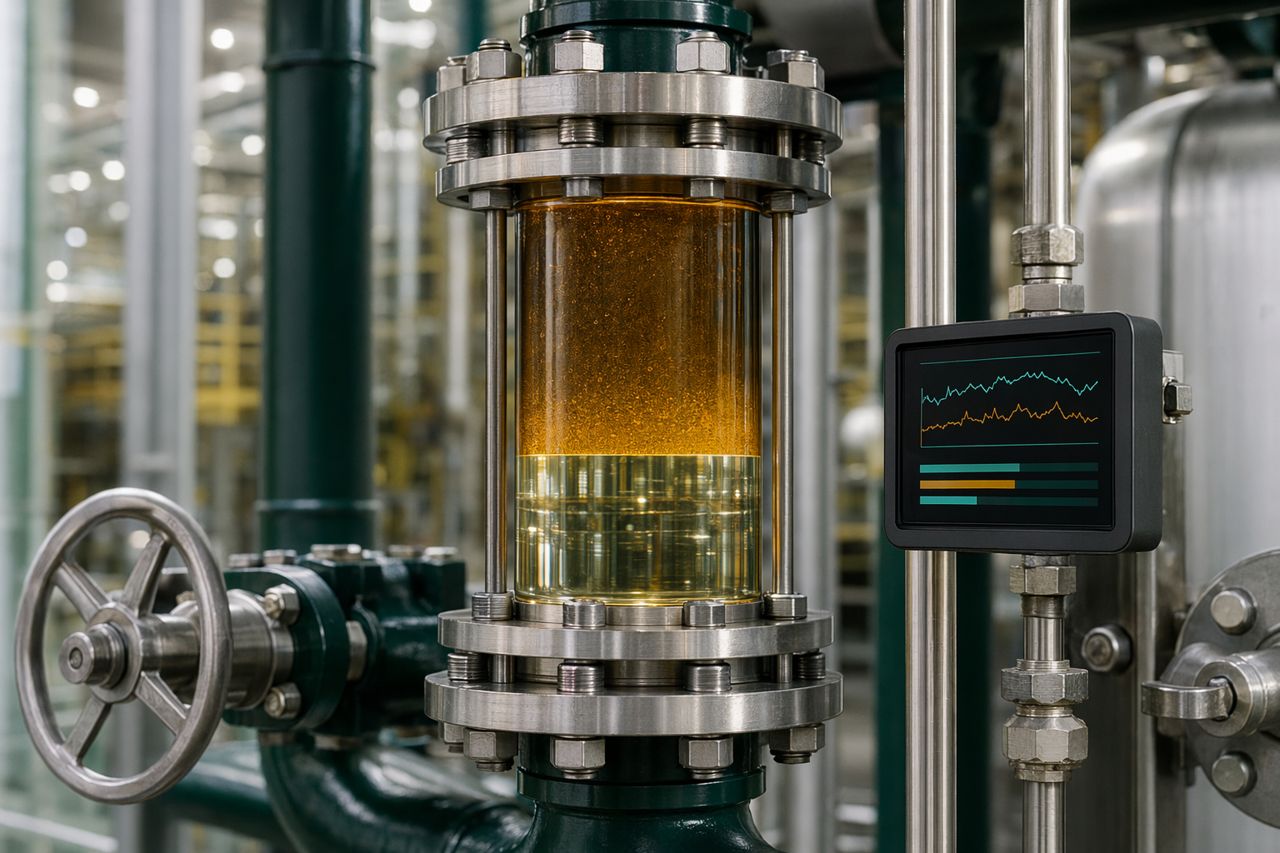
In enzyme-assisted degumming, water is more than a carrier. It influences phospholipid hydration, reaction environment, gum phase behavior, separator load, and downstream refining performance.
Poor water control can show up as:
- unstable phosphorus results after centrifugation
- variable gum consistency and discharge behavior
- higher entrained oil in gums
- elevated wastewater volume or organic load
- extra cleaning frequency due to deposits or fouling
- slower start-ups after feedstock changes
- inconsistent neutral oil yield across campaigns
Good water control gives the enzyme program a stable operating window. That stability is often what separates a promising trial from a repeatable refinery practice.
Where water enters the degumming line
Most refinery teams focus on the main water addition point, but a complete review should include every place water touches the oil or equipment.
Process dilution and enzyme addition
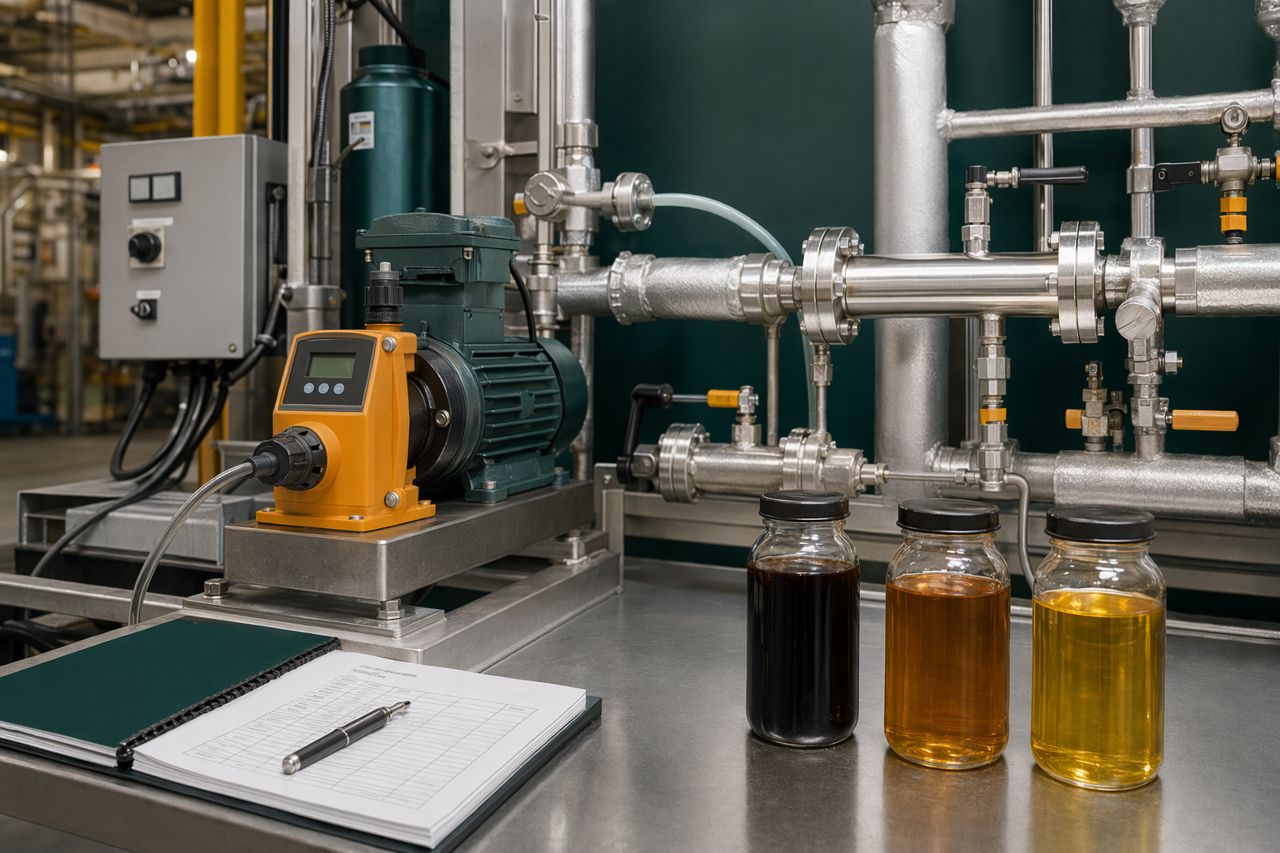
Enzyme dosing often requires controlled dilution and reliable injection. The objective is not simply to add water; it is to introduce a consistent enzyme stream into the oil with enough dispersion to support contact, without overloading the separator or pushing unnecessary water downstream.
Key checks include:
- dilution water quality and temperature consistency
- injection point location relative to mixing intensity
- pump repeatability at low dosing rates
- dead legs or stagnant dilution lines
- short-term variation during start-up and rate changes
A small instability at this point can appear later as phosphorus variation, gum carryover, or inconsistent centrifuge response.
Hydration water
Hydration water helps move phospholipids into a separable phase. Too little hydration can leave phosphorus in the oil. Too much can increase gum volume, separator burden, and wastewater load.
The right setpoint depends on crude oil quality, phosphorus profile, non-hydratable phospholipids, acid or caustic pretreatment if used, mixing system, retention time, and separator configuration.
Enzymelight approaches this as a plant-specific control question rather than a generic dosing recommendation.
Wash water and downstream contact
Some layouts use additional water contact after degumming or in linked neutralization and washing steps. If upstream enzyme degumming improves phosphorus removal and gum separation, the downstream wash demand may become easier to control.
That can reduce hydraulic load and help stabilize dryer operation, soapstock handling, or bleaching preparation depending on the refinery route.
Cleaning water
Water used for flushing and CIP can be a hidden cost in degumming performance. Frequent cleaning may indicate fouling, poor gum separation, heat exchanger deposition, or unstable emulsions.
An enzyme program should be judged not only by lab phosphorus reduction, but also by what it does to the plant’s cleaning rhythm.
Wastewater load: volume is only one part of the cost
Refineries often look first at cubic flow, but wastewater cost is also shaped by organic load, emulsified oil, phosphorus, soaps, suspended solids, pH swings, and treatment plant stability.
A better degumming line can contribute to wastewater improvement by:
- improving gum phase separation before effluent is generated
- reducing avoidable wash water demand
- limiting oil carryover into aqueous streams
- reducing rework and off-spec tank handling
- supporting steadier operation through feedstock variation
The target is not simply to use less water. The target is to use the right water, at the right point, with the right mixing and separation behavior.
Centrifuge behavior is the real-time signal
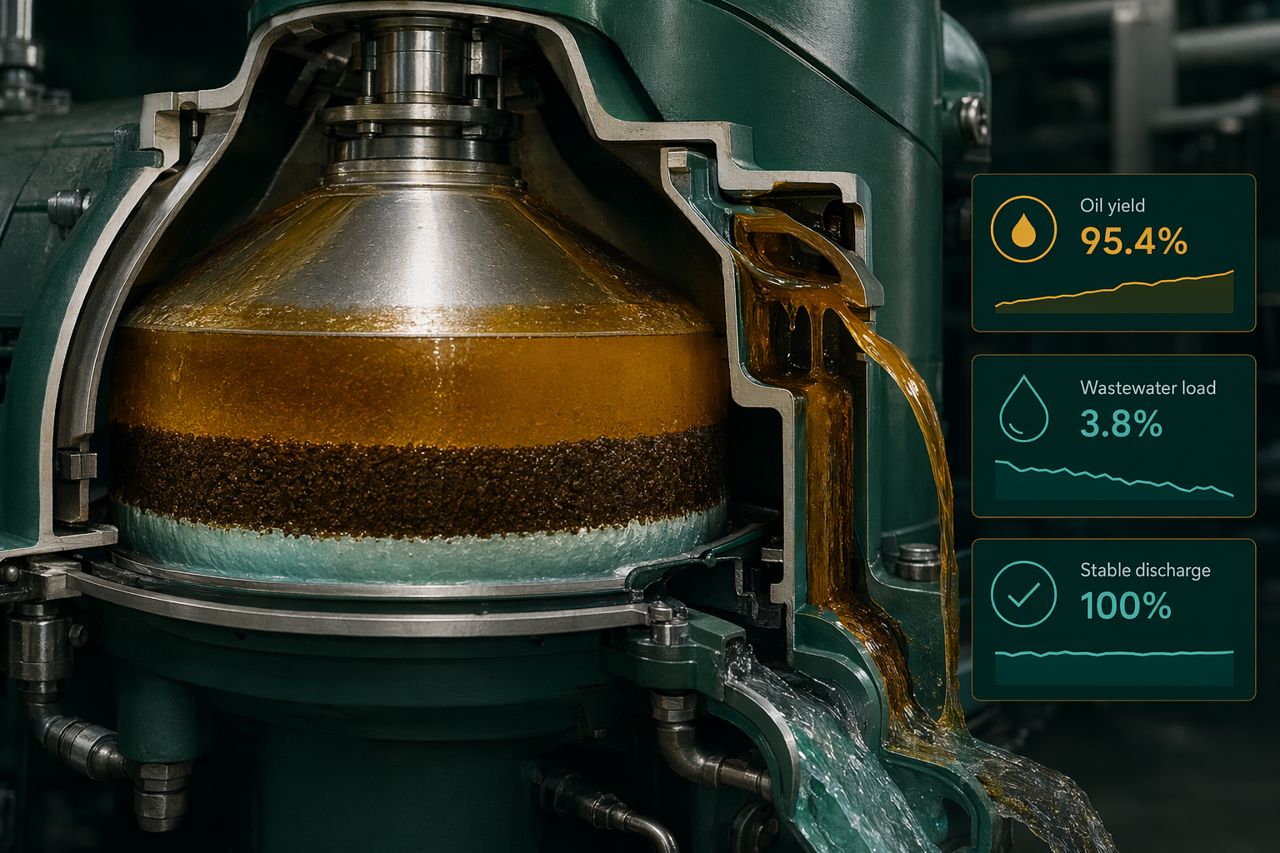
The separator often tells the truth before the final lab result arrives. Refinery operators can see when the water-oil-gum balance is right.
Watch for:
- clear oil phase with stable interface behavior
- manageable gum viscosity and discharge consistency
- lower vibration or fewer upsets after rate changes
- reduced haze in sight glass or sample jars
- less oil loss in the heavy phase
- faster recovery after crude oil variability
When enzyme degumming and water management are aligned, centrifuge operation becomes less reactive. Operators spend less time chasing interface issues and more time holding production rate.
Neutral oil loss and water discipline
Neutral oil loss is one of the most commercial metrics in degumming. Excessive water, poor mixing, unstable emulsions, and overloaded separation can all increase oil in gums or wastewater.
An enzyme supplier should help the refinery evaluate the full trade-off:
- phosphorus target achieved
- oil retained in the light phase
- gums discharged cleanly
- wastewater load kept under control
- dosing system remains practical for operators
- line uptime improves or remains stable
Enzymelight’s focus is not to sell an enzyme in isolation. It is to help the refinery run a controlled degumming step with measurable yield and operational value.
Practical control points for refinery managers
For a water management review, Enzymelight recommends mapping the line around control points that operators can actually maintain.
1. Feedstock variability
Crude soybean, rapeseed, sunflower, corn, and other oils can vary in phosphorus level, phospholipid composition, moisture, metals, and prior storage conditions. Water setpoints that work for one crude parcel may underperform on another.
Build the program around expected feedstock ranges, not only ideal samples.
2. Water quality
Hardness, microbial condition, suspended matter, temperature, and pH can affect consistency. If dilution or hydration water changes by shift or utility source, the enzyme step may inherit that variability.
3. Mixing energy
Enzyme contact and phospholipid hydration depend on effective dispersion. Too little mixing gives poor contact. Too much shear in the wrong location may encourage persistent emulsions.
The best arrangement is specific to the line layout: static mixers, high-shear mixers, retention vessels, heat exchangers, and separator feed conditions all matter.
4. Retention and temperature stability
Operators need enough residence time under stable process conditions. Short retention during high-throughput operation can be a limiting factor. Temperature swings can also create performance variability even when dosing remains unchanged.
5. Separator loading
Water addition affects hydraulic load, gum volume, and phase separation. A dosing program that looks attractive on paper must still respect separator capacity and discharge behavior.
6. Cleaning frequency
Track cleaning as a process performance indicator. If a program improves phosphorus results but increases downtime, it is not yet optimized.
Trial design: prove the water balance, not only the phosphorus result
A strong plant trial should capture both refinery chemistry and operational consequences. Enzymelight structures edible oil degumming trials around measurable process accountability.
Useful trial metrics include:
- crude oil quality and baseline phosphorus
- phosphorus after degumming and after separation
- water addition points and setpoints
- enzyme dosing stability
- separator feed rate and discharge observations
- oil loss in gum or heavy phase indicators
- wastewater volume and visible oil carryover
- cleaning frequency before and after the trial
- operator comments on interface control and start-up behavior
The strongest trials include a baseline period, an enzyme trial period, and a stabilized operating period so the team can separate real performance from start-up noise.
Supply reliability matters when the line depends on consistency
Once an enzyme program is integrated into refinery water control, supply reliability becomes operational risk management. A late shipment or inconsistent lot can affect production planning, dosing discipline, and crude oil scheduling.
Enzymelight supports B2B refinery buyers with:
- application-fit enzyme recommendations for degumming lines
- practical trial planning and review
- documentation for procurement and plant teams
- batch-to-batch supply discipline
- scale-up support for repeat operation
- commercial communication built around refinery KPIs
What a good enzyme degumming discussion should include
When speaking with an enzyme supplier, refinery managers should expect direct answers to practical questions:
- Where should the enzyme be dosed in our existing line?
- How much dilution water is operationally sensible?
- How will this affect separator loading?
- What phosphorus target is realistic for our crude oil mix?
- What should operators watch during the first shifts?
- How will we estimate yield impact and neutral oil loss?
- What wastewater changes should we monitor?
- What supply plan supports continuous refinery operation?
If the conversation stays only in product claims, it is incomplete. A refinery needs a process program.
Enzymelight’s position
Enzymelight is an enzyme supplier for edible oil degumming focused on refinery practicality: phosphorus reduction, controllable dosing, centrifuge behavior, yield protection, water discipline, and reliable supply.
We help plant teams evaluate where enzyme degumming can reduce process friction without adding unnecessary operating complexity.
Request a quote
Planning a degumming trial, reviewing wastewater load, or comparing enzyme options for a refinery line?
Use the on-site request a quote form and share your crude oil type, current degumming route, phosphorus target, approximate throughput, and any water or centrifuge constraints. Enzymelight will respond with a practical supply and trial discussion for your plant.