Enzymatic Degumming vs. Acid Degumming: A Procurement View for Refineries
For an edible oil refinery, degumming is not just a chemistry choice. It affects production planning, centrifuge loading, caustic demand, soapstock formation, neutral oil loss, wastewater volume, inventory risk, and the confidence your team has in hitting phosphorus targets on variable crude oil.
Acid degumming remains familiar, low-barrier, and widely used. Enzymatic degumming asks for tighter process discipline, but it can return value through deeper phosphorus removal, improved oil yield, reduced downstream burden, and a more controllable route when crude quality changes.
Enzymelight supports refineries evaluating enzymatic degumming with a procurement lens: not only what the enzyme costs, but what the process delivers across uptime, yield, dosing control, and supply continuity.
The procurement question is not “enzyme or acid?”
The better question is:
Which degumming route gives the lowest predictable cost per ton of refined oil at the phosphorus target your refinery must hit?
That answer depends on:
- Crude oil source and seasonal variability
- Current phosphorus entering neutralization or physical refining
- Centrifuge capacity and separation stability
- Hydration behavior of phospholipids
- Neutral oil loss to gums or soapstock
- Acid, caustic, water, and wastewater costs
- Holding time and tank availability
- Operator control over pH, temperature, mixing, and dosing
- Reliability of enzyme supply and technical support during trials
When procurement compares degumming options, the enzyme line item should be weighed against the full operating envelope.
Acid degumming: familiar, fast to adopt, but not always lowest cost
Acid degumming is attractive because it is known, widely understood, and typically easy to source. It can convert non-hydratable phospholipids into a more removable form and fits many existing refinery layouts.
From a purchasing perspective, the strengths are clear:
- Simple chemical availability
- Familiar operator routines
- Limited change to the process flow
- Straightforward storage and dosing equipment
- Predictable unit chemical pricing
However, acid degumming can carry hidden costs when crude oil is difficult or phosphorus targets are tight:
- Higher risk of residual phosphorus entering later stages
- More dependence on downstream neutralization or bleaching
- Potentially higher neutral oil entrainment in gums
- More acid and caustic interaction downstream
- Increased wastewater and soapstock handling load
- Less value capture when gums carry recoverable oil
For plants selling into physical refining routes or trying to reduce refining loss, these tradeoffs matter.
Enzymatic degumming: process value beyond the purchase price
Enzymatic degumming uses targeted phospholipase chemistry to modify phospholipids so they separate more effectively from oil. For procurement and production teams, the value is not academic. It is operational.
A well-designed enzymatic program can support:
- Lower residual phosphorus before bleaching or deodorization
- Better gum separation in the centrifuge
- Lower neutral oil loss to gum phase
- Reduced caustic demand in downstream steps
- Lower soapstock and wastewater burden
- Improved yield recovery from the same crude oil input
- More stable performance on variable crude lots
- A measurable trial path before full plant adoption
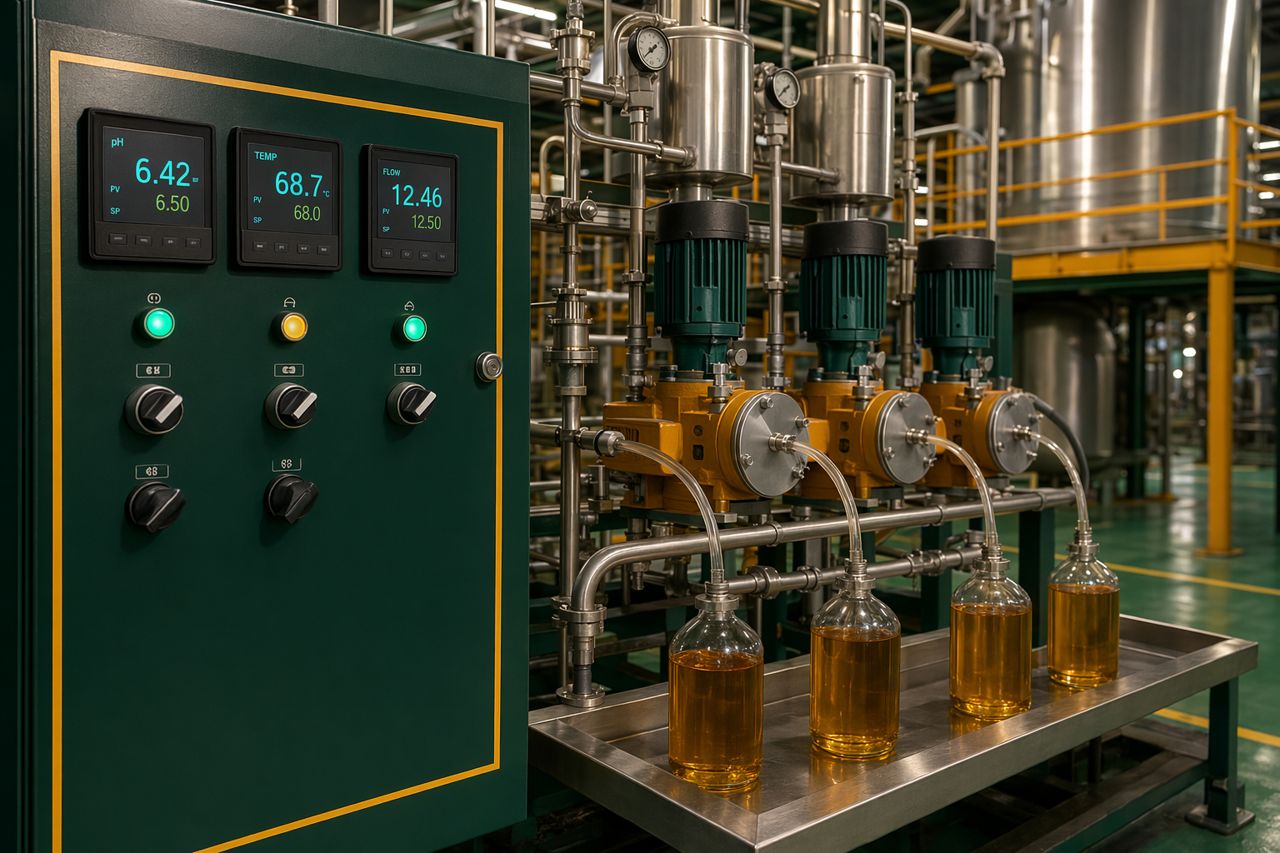
The key is control. Enzymes perform best when the plant manages hydration, pH window, temperature, mixing energy, retention time, and centrifuge balance. Procurement should therefore evaluate the supplier’s process accountability as strongly as the product itself.
Comparison for refinery purchasing teams
| Procurement factor | Acid degumming | Enzymatic degumming |
|---|---|---|
| Initial buying simplicity | High; commodity-style purchasing | Requires supplier qualification and trial planning |
| Process familiarity | Very high | Moderate; operator training required |
| Phosphorus reduction potential | Effective, but may be limited on difficult crude | Strong when process conditions are controlled |
| Neutral oil loss | Can be higher through gum entrainment | Often improved through cleaner phase separation |
| Centrifuge behavior | Familiar, but gum quality can vary | Can improve separation if hydration and reaction are managed |
| Downstream chemical load | May increase caustic, bleaching, or wastewater demand | Can reduce downstream burden depending on target and route |
| Inventory risk | Multiple chemical suppliers available | Requires dependable enzyme supply planning |
| Trial requirement | Usually minimal | Essential for validating yield and phosphorus targets |
| Best-fit purchasing logic | Lowest apparent input cost | Lowest controlled operating cost and yield improvement |
Where enzymatic degumming changes the cost model
Procurement teams often see enzyme as an additional cost. In practice, enzymatic degumming should be evaluated as a yield and reliability lever.
1. Phosphorus targets become more controllable
Residual phosphorus is not only a lab number. It determines whether downstream refining stays stable. If phosphorus carries through, refineries may compensate with more bleaching earth, more caustic, slower operation, or more rework risk.
Enzymatic degumming can help move phosphorus reduction earlier in the process, where separation can be managed before the oil enters more expensive finishing stages.
2. Neutral oil loss becomes a measurable procurement metric
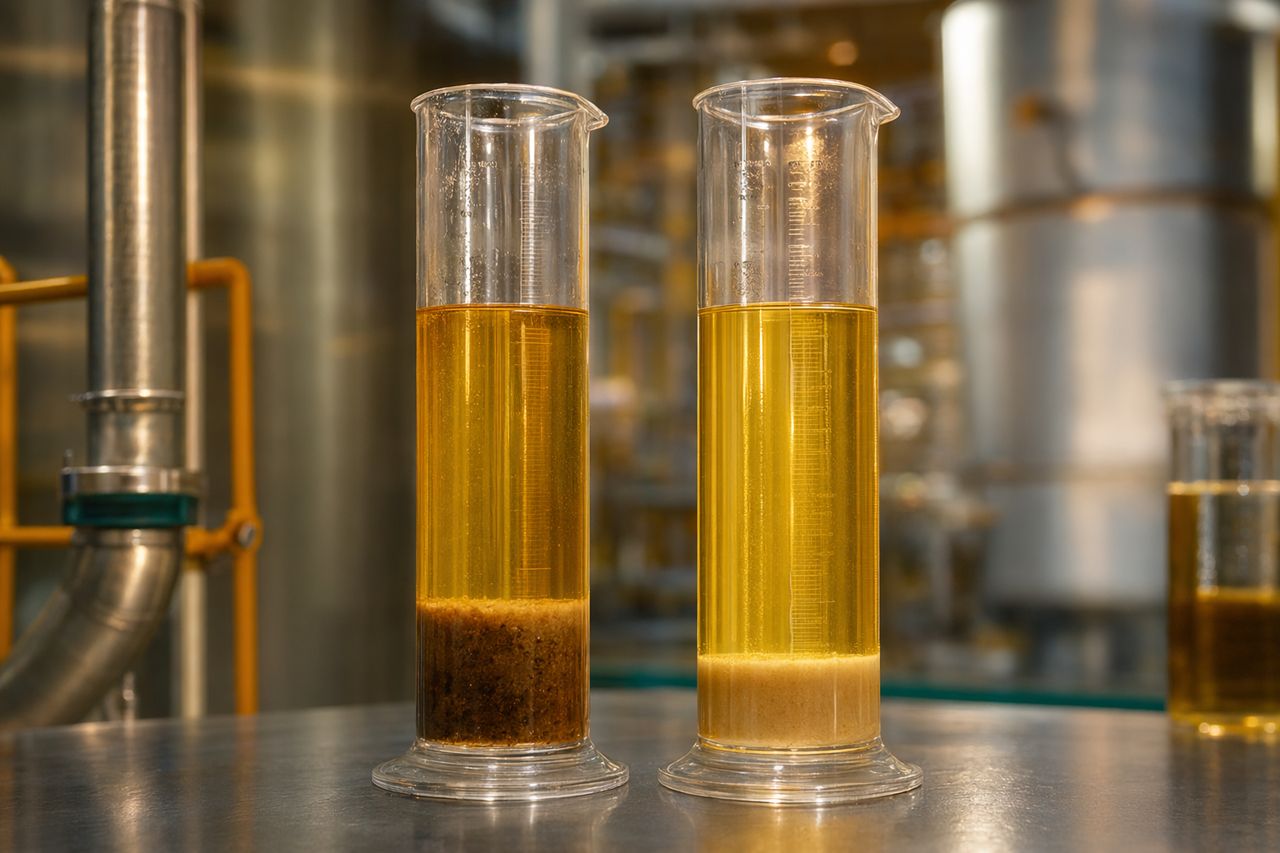
A small reduction in neutral oil loss can outweigh the cost of the enzyme. Procurement should ask production to track oil balance, gum phase behavior, and yield recovery during any trial.
The commercial question is direct: how much saleable oil is retained by changing the degumming route?
3. Centrifuge stability affects uptime
A degumming program that looks good on chemistry but destabilizes centrifuge behavior is not a successful program. Separation must be repeatable across crude lots, operator shifts, and production rates.
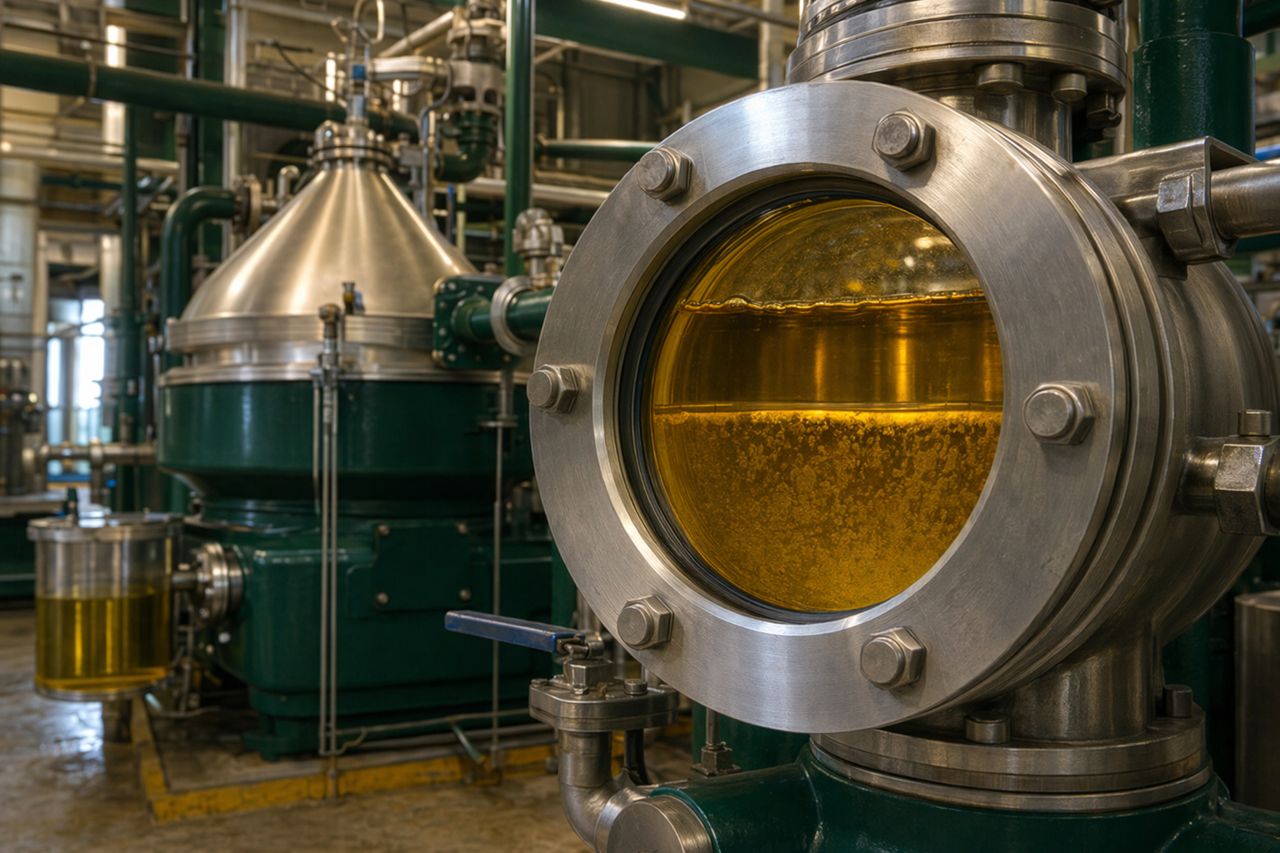
Enzymelight’s approach emphasizes plant-floor observation: interface control, gum consistency, sight-glass behavior, discharge stability, and how quickly operators can correct drift.
4. Water and wastewater costs are part of the economics
Degumming choices affect wash water, soapstock, gum volume, and effluent load. Where wastewater handling is constrained, enzymatic degumming may deliver value beyond yield alone.
Procurement should include utilities and waste handling in the comparison, not only chemical purchase price.
Trial design: what procurement should require before awarding supply
An enzyme supplier for edible oil degumming should support a practical trial structure with clear production metrics. A good trial does not need to disrupt the plant, but it does need discipline.
Procurement, operations, and quality should align on:
- Baseline crude oil phosphorus and moisture profile
- Existing acid degumming performance
- Target phosphorus after degumming
- Refinery route: chemical or physical refining
- Planned enzyme dosing range and control logic
- pH, temperature, mixing, water addition, and retention conditions
- Centrifuge settings and interface observations
- Gum volume and oil carryover checks
- Downstream caustic, bleaching, or filtration impacts
- Yield comparison over a meaningful production window
The goal is not to prove that enzymes work in general. The goal is to prove that the selected enzyme program works in your refinery, on your crude, with your operators, at your production rate.
Supplier qualification: what to ask Enzymelight or any candidate
When selecting an enzyme partner, procurement should go beyond price and lead time.
Ask the supplier:
- What crude oil types and refinery routes are you prepared to support?
- How do you help define the trial protocol?
- What process variables must be controlled for stable performance?
- How do you support operators during the first production runs?
- What packaging and inventory plans reduce supply interruption risk?
- How do you help troubleshoot high residual phosphorus or unstable separation?
- What data should be captured to justify a commercial rollout?
- How do you scale from trial dosing to routine procurement without performance drift?
For Enzymelight, the supply relationship is built around practical accountability: define the target, run the trial cleanly, watch the centrifuge, document the yield case, and support repeatable adoption.
When acid degumming may still be the right choice
Enzymatic degumming is not automatically the answer for every refinery. Acid degumming may remain suitable when:
- Phosphorus targets are moderate and consistently achieved
- Crude quality is stable and predictable
- Yield improvement potential is limited
- Retention time or tank availability is too constrained
- The plant cannot control the required process window
- Procurement strategy prioritizes commodity chemical simplicity over process optimization
A credible enzyme supplier should be able to say when the business case is not strong enough.
When enzymatic degumming deserves serious evaluation
Enzymatic degumming should be on the procurement agenda when:
- Residual phosphorus is limiting throughput or quality confidence
- Neutral oil loss to gums is commercially significant
- Downstream caustic, bleaching earth, or wastewater costs are rising
- The refinery is processing variable crude sources
- Physical refining requires stronger front-end phosphorus control
- Centrifuge performance is acceptable but could be improved through cleaner separation
- Management wants a measurable yield-improvement project with defined payback logic
In these cases, buying enzyme is not simply buying an additive. It is buying a controlled process improvement.
Enzymelight’s position
Enzymelight supplies enzyme solutions for edible oil degumming with a focus on refinery practicality. We help teams move from procurement curiosity to plant evidence: phosphorus reduction, centrifuge behavior, neutral oil retention, water impact, and supply reliability.
If your refinery is comparing enzymatic degumming with acid degumming, Enzymelight can help structure the evaluation around the metrics that decide the business case.
Request a quote
Planning a degumming trial or reviewing your current acid route? Share your crude oil type, refinery route, phosphorus target, current degumming setup, and monthly volume through the on-site request form.
Request a quote and Enzymelight will respond with a practical supply and trial discussion for your refinery.