Enzyme Supplier for Edible Oil Degumming
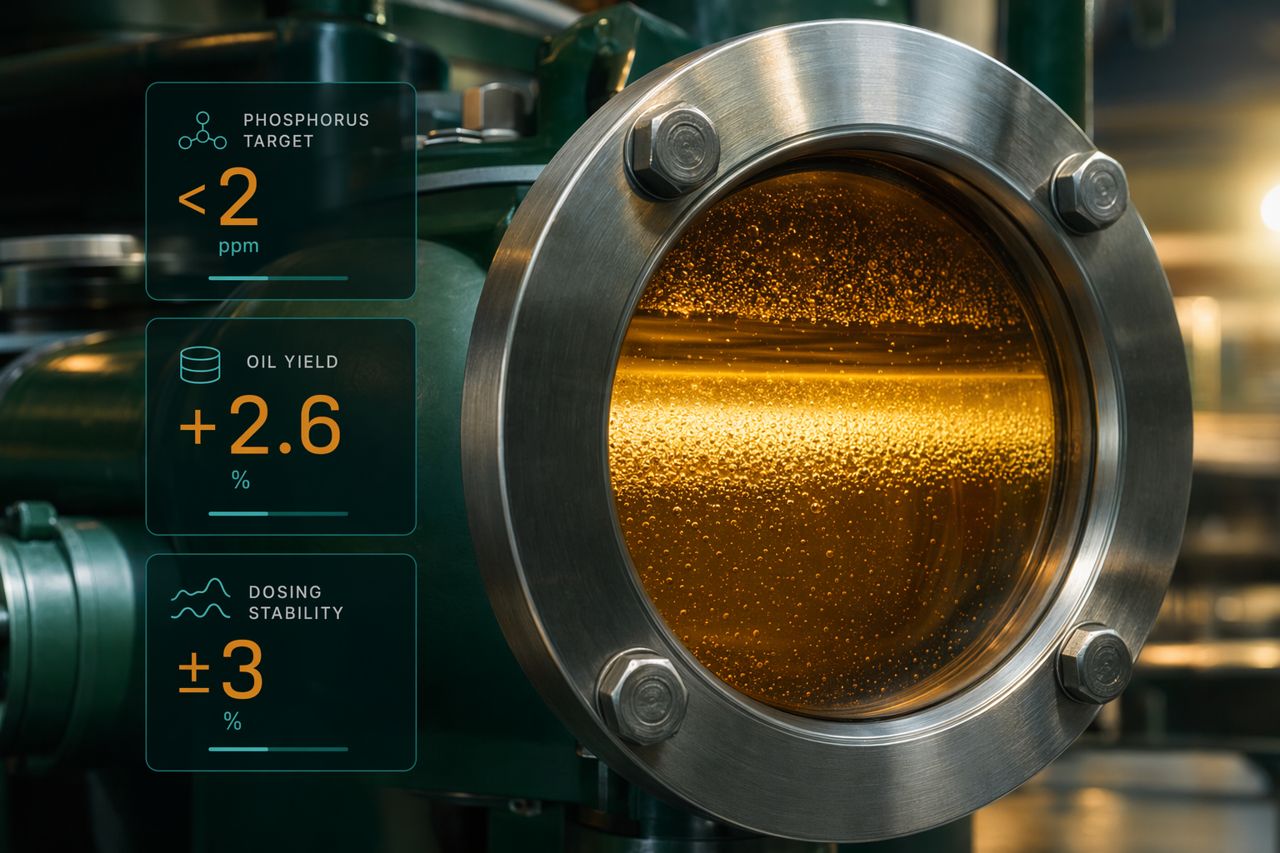
Enzymelight supplies enzymes for edible oil degumming wholesale and in bulk, quoted per order. We work with edible oil refineries, manufacturers, distributors and resellers, and biotech companies that need dependable degumming inputs without unnecessary complexity, and we help procurement, refinery, and technical teams evaluate fit, control dosing, run structured trials, and move toward stable phosphorus reduction with practical plant-floor accountability.
Enzymatic degumming is not just a chemical substitution. It changes how gums hydrate, how the centrifuge behaves, how much neutral oil remains in the gum phase, and how consistently crude oil variability is handled across incoming lots. Enzymelight focuses on the commercial and operating details that matter: target phosphorus, yield protection, water handling, dosing discipline, storage reliability, and repeatable supply.
Wholesale and bulk supply. Request a quote. Send the product, the quantity and the destination through the inquiry form, and we reply with a quote. Refinery details such as oil type and phosphorus target help, but are not needed to start.
Enzymatic degumming built around refinery outcomes
For edible oil refiners, the value of an enzyme program is measured in the process, not in a brochure. The right supply package should help your team answer clear operational questions:
- Can we reach the phosphorus target required for downstream refining?
- Will centrifuge separation remain stable across crude oil variation?
- Can neutral oil loss in gums be reduced without adding operator burden?
- Is dosing simple enough for consistent shift-to-shift execution?
- Can trial results be translated into procurement and production planning?
- Will supply remain reliable once the process is approved?
Enzymelight works from those questions backward. We position enzyme selection, handling guidance, and trial support around refinery KPIs rather than abstract lab language.
Who buys from Enzymelight
| Buyer | What they usually need from the quote |
|---|---|
| Edible oil refinery | Trial lot, then routine bulk supply matched to throughput and campaign schedule |
| Manufacturer running its own oil processing | Enzyme fit for its oil type and degumming route, with handling guidance for the plant team |
| Distributor or reseller | Repeatable product, consistent documentation, and reorder planning for their own customers |
| Biotech company or process developer | Enzyme supply for development work and scale-up trials |
Every order is quoted individually. We do not publish fixed prices, minimum orders, or lead times, because they depend on the product, the quantity, and the destination.
Where enzyme degumming fits in an edible oil refinery
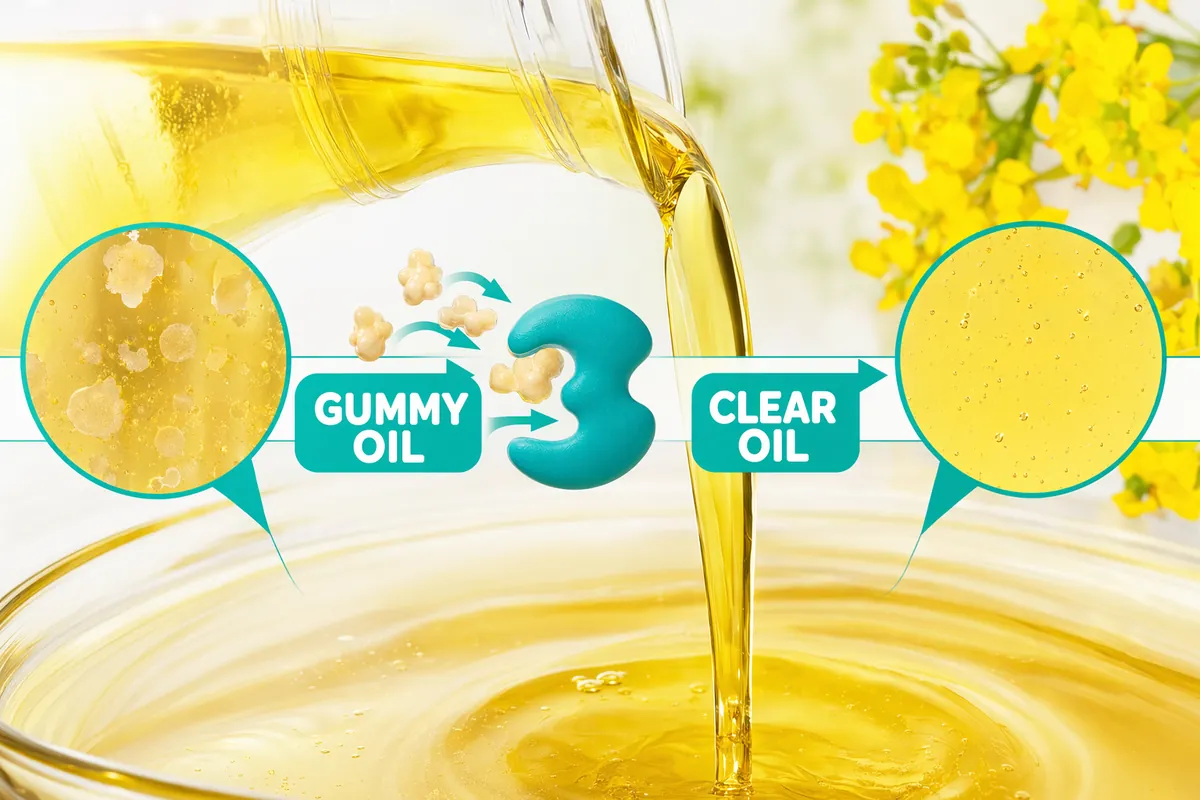
Enzymatic degumming is typically evaluated where conventional water or acid degumming leaves too much phosphorus, creates avoidable oil loss, or limits downstream efficiency. In vegetable oil refining, the enzyme is used to modify phospholipids so they separate more effectively during centrifugation.
Common refinery drivers
- Lower residual phosphorus before neutralization, physical refining, or bleaching
- Better gum separation and cleaner oil phase after the centrifuge
- Reduced neutral oil carryover into wet gums
- Improved yield from the same crude oil supply
- Lower chemical pressure in later refining stages
- More predictable handling of high-gum or variable crude oils
- Better economics when crude quality, energy, and by-product values are considered together
Enzymelight helps buyers evaluate these drivers against their own crude slate, plant configuration, and commercial assumptions.
What Enzymelight supplies
Enzymelight supplies enzyme solutions for edible oil degumming, along with practical guidance for refinery implementation. We are a standalone B2B supplier partner focused on helping plants make informed procurement decisions and run disciplined process trials.
Our supply focus includes
- Enzyme selection aligned with oil type and degumming route
- Dosing-control guidance for continuous refinery operation
- Support for trial planning, sampling points, and KPI tracking
- Storage and handling recommendations for plant teams
- Supply planning for approved refinery programs
- Documentation support for procurement and technical review
We do not frame enzyme degumming as a one-size-fits-all additive. Crude oil origin, pretreatment, temperature profile, acid and water addition, retention time, mixing quality, and centrifuge condition all influence the outcome. Enzymelight helps refine the supply conversation around those realities.
What to define before requesting a quote
A useful quotation starts with process context. You do not need every answer, but the more of it you share, the more specific the quote.
Oil type and crude oil variability
Share the primary oils being processed, such as soybean, canola, sunflower, corn, or mixed soft oils. If the refinery sees seasonal variation, changes in crude supplier, or swings in non-hydratable phospholipids, that should be part of the discussion.
Current degumming route
Enzymelight will usually ask how the line is currently operated:
- Water degumming, acid degumming, enzymatic degumming, or hybrid route
- Acid and water addition strategy
- Hydration temperature range
- Mixing intensity and contact time
- Residence time before separation
- Centrifuge type and observed separation behavior
- Gum moisture, gum viscosity, and discharge consistency
Phosphorus target and downstream requirement
The buying case should be tied to the phosphorus level required after degumming. The target may depend on whether the refinery is running chemical refining, physical refining, specialty oil production, or a customer-specific specification. The enzyme program, dosing window, and trial acceptance criteria should be aligned with that actual downstream need.
Process accountability from trial to routine supply
A useful enzyme trial should be more than a few isolated samples. It should show how the process behaves under realistic refinery conditions and whether the economics justify scale-up.
Trial planning that refinery managers can use
Enzymelight can support a structured trial framework covering:
- Baseline definition — current phosphorus level, gum volume, oil-in-gum loss, chemical use, and centrifuge behavior.
- Operating window — crude oil type, feed consistency, mixing quality, retention time, water addition, and separation conditions.
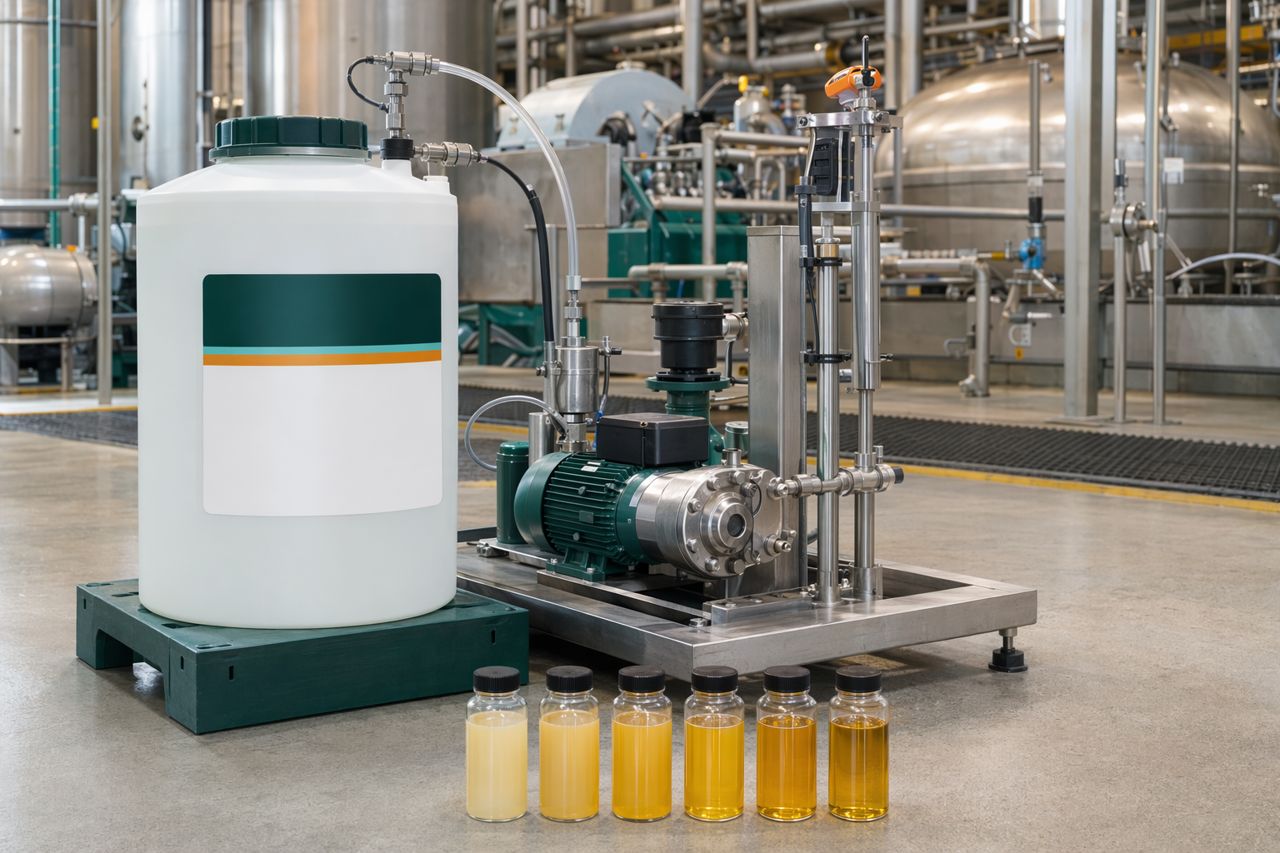
- Dosing plan — controlled introduction of enzyme with clear adjustment logic for operators.
- KPI tracking — phosphorus reduction, oil yield impact, gum phase quality, water use, and downstream refining response.
- Decision review — commercial comparison against the current degumming route and realistic supply planning.
The goal is not a dramatic one-day result that cannot be repeated. The goal is a controlled process window your team can trust.
Better centrifuge behavior matters
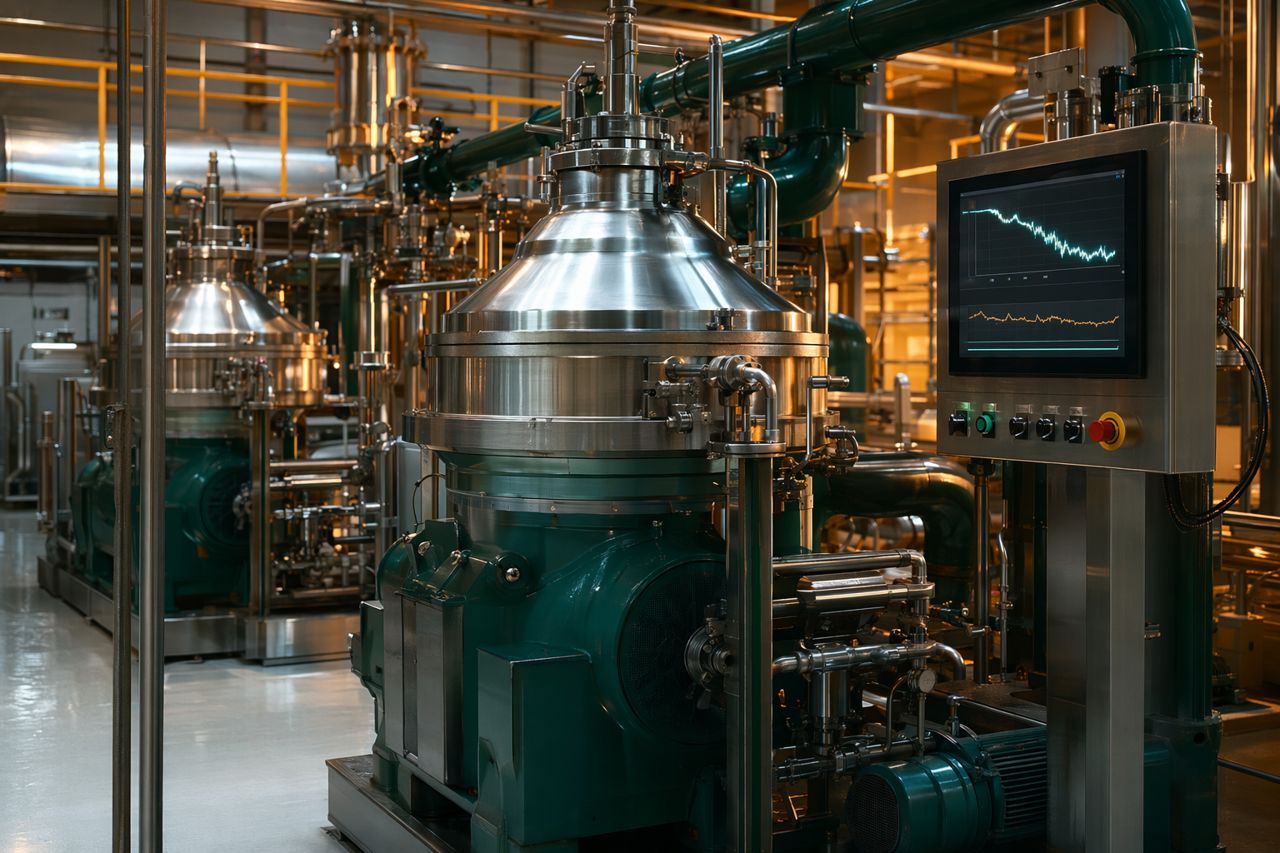
In edible oil degumming, centrifuge stability is often where trial success becomes visible. When gums separate cleanly and the oil phase is clearer, the plant gains more than an improved laboratory number. Operators see fewer separation swings, less haze carryover, and a more manageable interface.
Enzymelight focuses on the link between enzyme performance and separation behavior. That includes realistic discussion of emulsion risk, feed variation, gum hydration, mixing energy, and the practical limits of existing equipment. An enzyme supply program should support the centrifuge, not fight it.
Protecting neutral oil yield
Neutral oil loss is a direct commercial issue. If too much oil leaves with the gum phase, the refinery pays for it every day. Enzymatic degumming is often considered because it can improve the split between oil and gum, supporting higher recoverable oil yield when the operating window is controlled.
Enzymelight helps buyers evaluate this in commercial terms:
- Reduced oil entrainment in gums
- Cleaner separation at the centrifuge
- Lower rework pressure
- Better value from each crude oil lot
- Potential improvement in downstream processing cost
- Water and gum handling, depending on site design, wastewater load, and gum outlet strategy
Yield value depends on the plant, crude oil quality, and baseline degumming performance. Enzymelight keeps the discussion practical and trial-led.
Procurement confidence for refinery teams
Buying an enzyme for edible oil degumming is not just a technical decision. Procurement teams need confidence that the selected supply can be approved, stored, scheduled, and replenished without disrupting refinery production.
Enzymelight supports B2B procurement with
- Clear product positioning for edible oil degumming use
- Batch-to-batch supply consistency expectations
- Lead-time discussion before scale-up commitments
- Commercial quote support for trials and routine supply
- Packaging and handling conversation suited to refinery operations
- Responsive technical coordination during evaluation
Handling and storage
Procurement should confirm receiving and storage expectations before the first shipment. Enzymelight provides practical guidance for:
- Recommended storage temperature range
- Protection from heat, direct sunlight, and contamination
- First-in, first-out inventory rotation
- Container handling and resealing practices
- Compatibility with plant dosing arrangements
- Shelf-life planning against campaign schedules
Documentation package
A refinery-grade supply relationship should include documentation that supports purchasing, quality, and site acceptance. Enzymelight can provide appropriate product and shipment documentation for the agreed supply program, such as:
- Product specification information
- Safety documentation
- Lot and batch traceability
- Storage and handling guidance
- Order and shipment identification
- Technical support records for trials and implementation
Supply reliability and reorder planning
Once a refinery approves an enzyme program, supply continuity becomes critical. Enzymelight supports procurement planning around:
- Forecasted monthly or campaign volume
- Lead time expectations by destination
- Order and shipment planning
- Buffer stock strategy for critical production windows
- Lot traceability and incoming documentation
- Reorder reminders aligned with consumption rate
The result is a cleaner path from technical interest to purchasing decision.
Suitable refinery applications
Enzymelight enzyme solutions may be evaluated in edible oil refining operations processing common vegetable oils where phospholipid control and yield improvement are priorities.
Typical evaluation areas
- Soybean oil degumming
- Rapeseed and canola oil degumming
- Sunflower oil degumming
- Corn oil degumming
- Other vegetable oil streams requiring phosphorus reduction before downstream refining
Application fit should always be confirmed against crude oil characteristics, existing pretreatment, refining route, and target product specification.
Why refinery teams choose Enzymelight
Enzymelight is built for industrial buyers who need more than ingredient availability. We bring a commercially practical approach to enzyme supply for edible oil degumming: clear trial structure, realistic operating guidance, and supply conversations that respect uptime.
What makes the Enzymelight approach different
- Plant-floor language — guidance tied to dosing, separation, phosphorus targets, and yield.
- Commercial discipline — trial design connected to value, not just technical possibility.
- Process realism — attention to crude oil variability, mixing, retention, and centrifuge limits.
- Supply reliability — planning support for trials and routine refinery demand.
- No unnecessary academic excess — clear information for managers, operators, and procurement teams.
Request a quote
Wholesale and bulk supply is quoted per order. To get a quote back quickly, put these in your inquiry:
- Product: the degumming enzyme you want priced, or the problem you need it to solve
- Quantity: trial lot and expected monthly or campaign volume
- Destination: country and delivery site
- Oil type, current degumming route and target phosphorus specification, if known
- Current pain points such as haze, gum loss, centrifuge instability, or chemical load
- Desired trial timing and preferred packaging format
If some details are not yet available, send what you have; Enzymelight can help define the missing trial inputs.