Enzymes for Soybean, Rapeseed, and Sunflower Oil Refining
Enzymelight is an enzyme supplier for edible oil degumming built around refinery reality: variable crude oil, changing gum loads, tight phosphorus targets, centrifuge behavior, and commercial pressure to protect neutral oil.
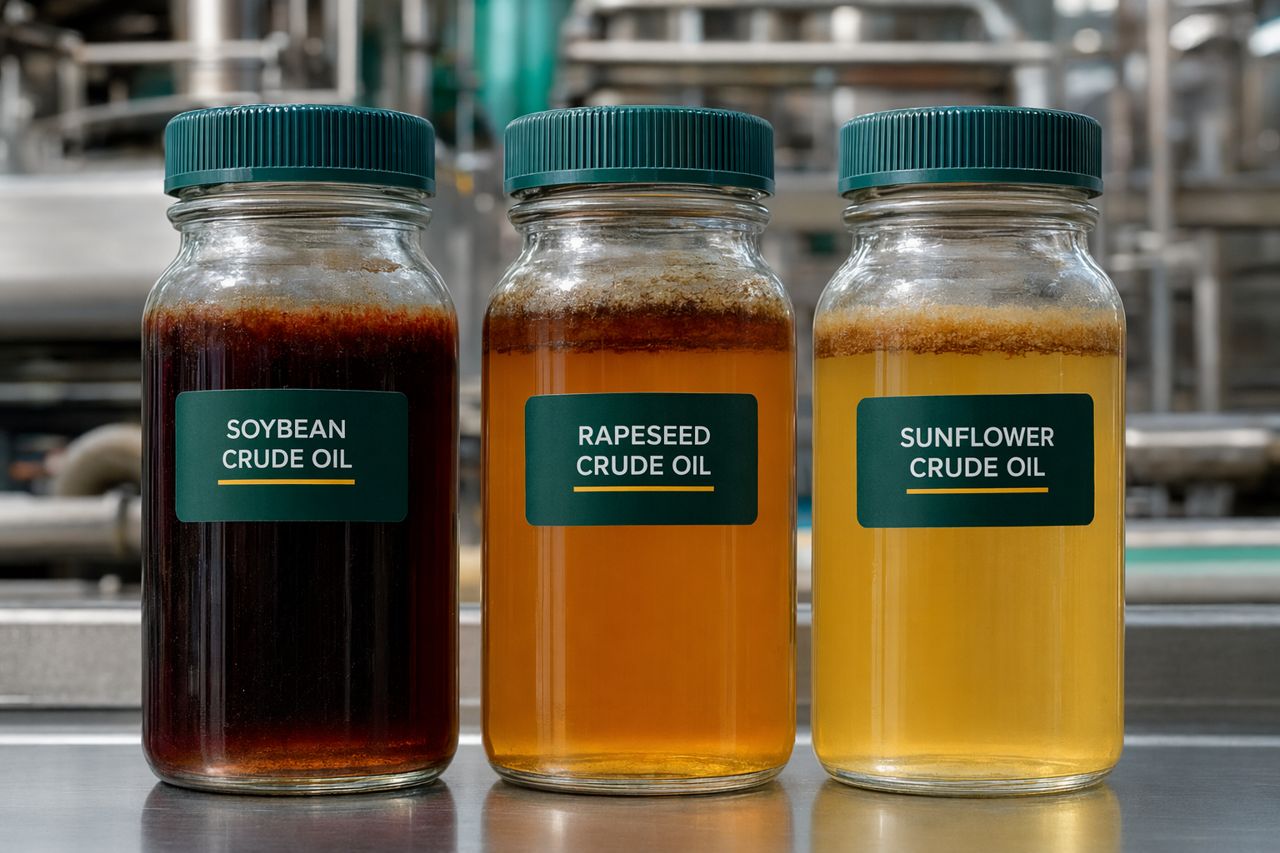
Soybean, rapeseed, and sunflower oils do not degum the same way. Each oil source brings a different phospholipid profile, haze behavior, separation response, and seasonal variability. Enzymelight helps refineries match enzyme selection and dosing strategy to the crude oil in front of the plant, and supplies the enzymes wholesale and in bulk, quoted per order.
Wholesale and bulk supply. Request a quote. Enzymelight supplies degumming enzymes by quotation to soybean, rapeseed and sunflower oil refineries, manufacturers, distributors and resellers, and biotech companies. Send the product, the quantity and the destination through the inquiry form, and we reply with a quote.
Practical enzymatic degumming for multi-oil refineries
Refineries running more than one seed oil need a degumming program that can flex without losing control. Enzymelight supports plant teams that need:
- Lower residual phosphorus before downstream refining steps
- Cleaner gum separation in the centrifuge
- Reduced neutral oil loss into gums and soapstock
- More predictable dosing control across crude oil changes
- Better response to seasonal crop variation
- A supply partner that understands uptime, trials, and scale-up
Our role is not just to ship enzyme. Enzymelight works with refinery teams on crude oil review, trial planning, process windows, and commercial evaluation so the degumming step is accountable to plant results.
Why oil source matters

Soybean oil: heavy phospholipid load and stable discharge
Soybean crude oil often brings a high phospholipid load and a demanding gum phase. In enzymatic degumming, the priority is converting difficult phospholipids into forms that separate cleanly while maintaining centrifuge stability.
Enzymelight supports soybean oil refineries focused on:
- Strong phosphorus reduction before neutralization or physical refining
- Improved gum handling and discharge consistency
- Lower neutral oil carryover into the gum stream
- Dosing control during crude oil quality swings
- Trial designs that compare enzyme performance against current acid or water degumming practice
Rapeseed oil: variable non-hydratable phospholipids
Rapeseed oil can challenge refineries with variable non-hydratable phospholipids and changes linked to seed origin, storage, and extraction conditions. A rigid degumming recipe can over-treat one crude oil and underperform on the next.
Enzymelight helps rapeseed oil processors evaluate:
- Enzyme choice for difficult phosphorus reduction
- Water addition and mixing behavior that supports separation
- Centrifuge response under changing gum load
- Downstream impact on caustic demand, soapstock formation, and bleaching load
- Commercial value from yield retention and reduced rework
Sunflower oil: bright clarification, haze control, and separation behavior
Sunflower oil refining often puts visual clarity and stable separation under close attention. Waxes, haze-forming material, and changing crude quality can complicate degumming and downstream polishing.
Enzymelight supports sunflower oil refineries seeking:
- Controlled phosphorus reduction without unnecessary process severity
- Improved separation of hydrated and converted gums
- Better clarification before bleaching and deodorization
- Practical integration with existing winterization or dewaxing strategy
- Repeatable operation during seasonal crude oil changes
What Enzymelight brings to the plant floor
Enzyme selection matched to your process
Enzymelight recommends degumming enzymes based on oil source, crude variability, target phosphorus level, current pretreatment, equipment configuration, and the refinery’s commercial goals. The aim is a process your operators can run, not a chemistry concept that only works under perfect conditions.
Dosing control without guesswork
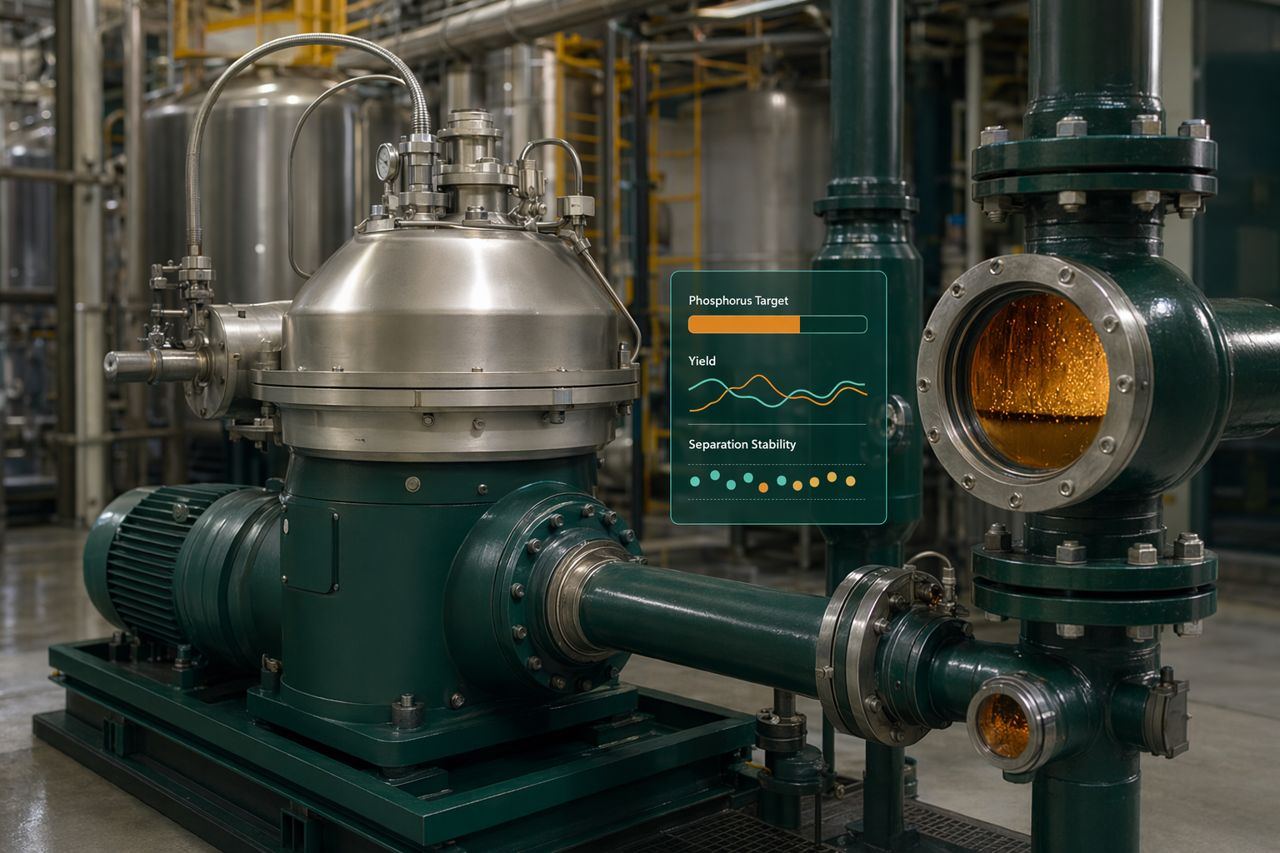
Enzyme dosing should be tied to plant response. Enzymelight helps define trial steps around phosphorus reduction, gum phase behavior, centrifuge clarity, oil yield, and downstream refining impact. The result is a dosing approach that can be adjusted as crude oil changes.
Centrifuge behavior as a key KPI
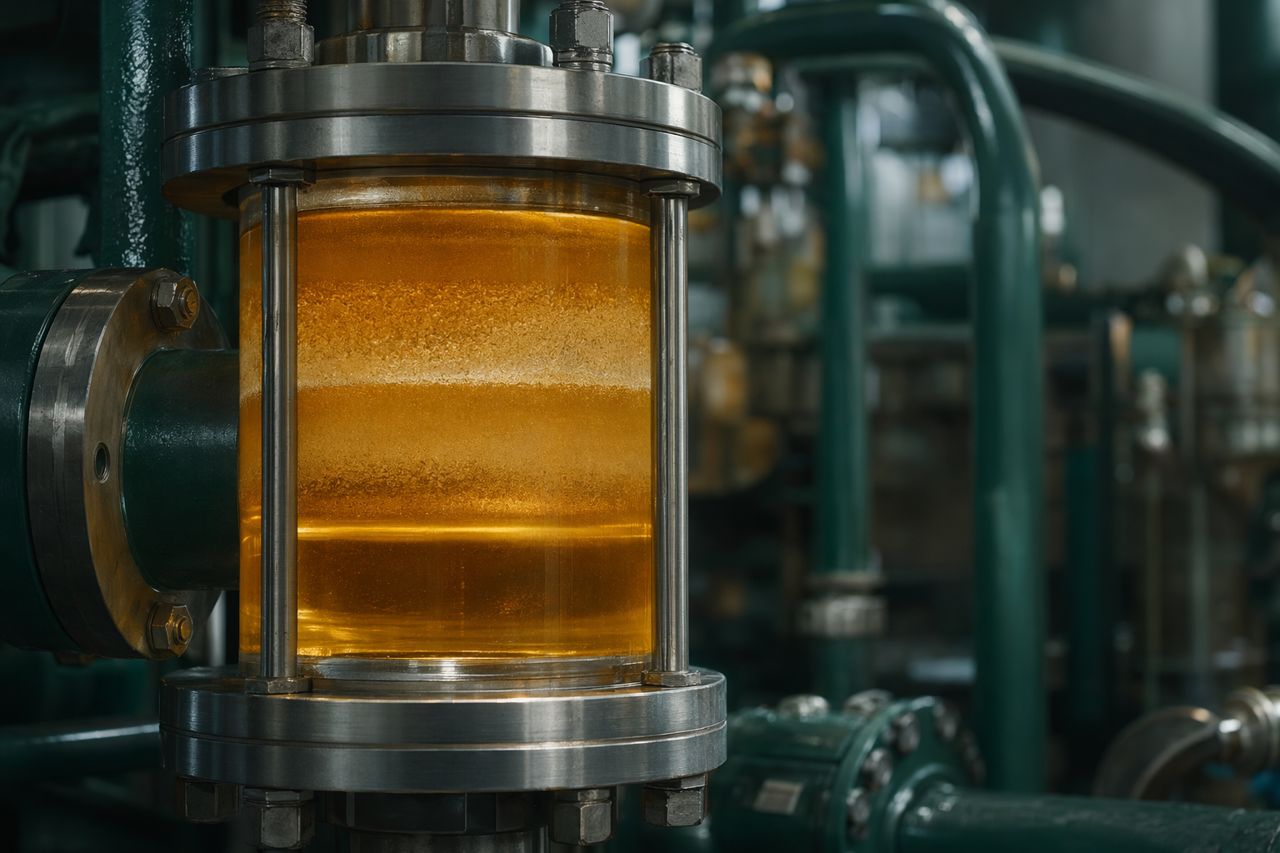
A degumming program is only useful if the separation step behaves. Enzymelight pays attention to interface stability, discharge consistency, gum volume, oil-in-gums risk, and the way operators actually see the process through sight glasses, samples, and daily production data.
Commercial accountability
The business case for enzymatic degumming usually sits across several value points: yield, chemical reduction, lower wastewater pressure, smoother refining, and fewer corrective actions. Enzymelight helps buyers evaluate the complete plant economics instead of treating enzyme cost as a standalone line item.
Typical refinery objectives
Enzymelight is a fit when your team is working on one or more of the following:
- Moving from water or acid degumming toward enzymatic degumming
- Improving phosphorus reduction before physical refining
- Reducing neutral oil loss in gums or soapstock
- Stabilizing separation across soybean, rapeseed, or sunflower campaigns
- Reducing process variability caused by seasonal crude oil quality
- Running a controlled plant trial with clear success criteria
- Securing dependable enzyme supply for continuous refinery operation
Trial support and implementation
A good trial should answer plant questions quickly. Enzymelight supports structured implementation with:
- Review of current degumming flow, crude oil sources, and pain points
- Enzyme recommendation aligned to oil source and phosphorus target
- Trial plan covering dosing approach, mixing, retention, water addition, and centrifuge observation
- KPI tracking for phosphorus reduction, separation quality, neutral oil loss, downstream impact, and operator feedback
- Scale-up support for procurement, storage, handling, and repeat supply
The goal is to help your team make a confident go or no-go decision based on operating data and commercial value.
Built for edible oil refinery buyers
Enzymelight speaks to refinery managers, technical directors, procurement teams, and process engineers who need a dependable enzyme supplier for edible oil degumming. We understand that the right product must fit the plant’s operating rhythm, documentation needs, delivery schedule, and cost model.
You can expect clear technical discussion, practical trial support, and responsive commercial handling from first inquiry through repeat supply.
Request a quote
If your refinery is evaluating enzymes for soybean, rapeseed, or sunflower oil degumming, Enzymelight quotes wholesale and bulk supply per order. To get a quote back quickly, put these in your inquiry:
- Product: the degumming enzyme you want priced, or the problem you need it to solve
- Quantity: trial lot and expected monthly or campaign volume
- Destination: country and delivery site
- Oil source, current degumming route, target phosphorus level and trial objectives, if known
Enzymelight will respond with a practical recommendation and quote path for your plant.